
Exploring the world of High-Yield Stocks for Long-Term Growth, this introduction sets the stage for an insightful journey into the realm of investment opportunities. With a focus on strategic decision-making and long-lasting financial gains, readers are invited to delve deeper into the intricacies of high-yield stock investments.
Providing a detailed overview of essential concepts and practical tips, this guide aims to equip readers with the necessary knowledge to make informed investment decisions in pursuit of long-term growth and stability.
Introduction to High-Yield Stocks
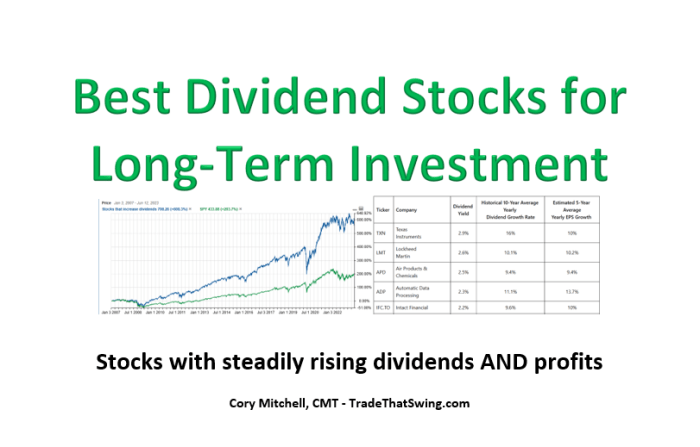
High-yield stocks are stocks that offer a higher dividend yield compared to the average yield of the market. These stocks are known for providing regular income through dividends, making them a popular choice for investors seeking long-term growth.
Dividend yield is a financial ratio that shows the annual dividend income as a percentage of the stock price. It is a key metric for investors looking to generate passive income from their investments. High-yield stocks typically have a higher dividend yield, indicating a higher return on investment in the form of dividends.
Examples of Popular High-Yield Stocks
- AT&T Inc. (T): AT&T is a telecommunications giant that offers a high dividend yield, making it attractive to income-seeking investors.
- Exxon Mobil Corporation (XOM): Exxon Mobil is a major player in the oil and gas industry and is known for its consistent dividend payments, appealing to investors looking for stability.
- Verizon Communications Inc. (VZ): Verizon is another telecommunications company that provides a reliable dividend yield, making it a favorite among income investors.
Factors to Consider When Choosing High-Yield Stocks
When selecting high-yield stocks, it is crucial to consider various factors that can impact the performance and sustainability of your investment. Company fundamentals play a significant role in determining the potential of high-yield stocks.
Importance of Company Fundamentals
Company fundamentals, such as financial health, management quality, and competitive positioning, are essential factors to assess when choosing high-yield stocks. These fundamentals provide insights into the overall strength and stability of the company, which can help determine its ability to maintain dividend payments over the long term.
- Payout Ratio:The payout ratio, which is the percentage of earnings paid out as dividends, is a key metric to analyze. A sustainable payout ratio indicates that the company has enough earnings to cover its dividend payments.
- Dividend History:Examining the company's dividend history can provide valuable information about its consistency in distributing dividends to shareholders. A track record of regular and increasing dividends is a positive sign.
- Earnings Growth:Analyzing the company's earnings growth over time is essential. A company with a history of strong and consistent earnings growth is more likely to sustain high dividend payments.
Market Conditions and Economic Factors
In addition to company fundamentals, market conditions and economic factors can also influence the performance of high-yield stocks. Factors such as interest rates, inflation, and overall market sentiment can impact the stock price and dividend yield of high-yield stocks.
- Interest Rates:High-yield stocks may become less attractive to investors when interest rates rise, as fixed-income investments like bonds become more appealing. This can put downward pressure on the stock price of high-yield companies.
- Inflation:Inflation erodes the purchasing power of dividends, making high-yield stocks less attractive if the dividend growth does not keep pace with inflation.
- Market Sentiment:Investor sentiment and market volatility can also affect the performance of high-yield stocks. Economic uncertainties or market downturns may lead to sell-offs in high-yield stocks.
Risks Associated with High-Yield Stocks
Investing in high-yield stocks can offer attractive returns, but it also comes with its own set of risks that investors should be aware of. Compared to growth stocks, high-yield stocks may be more sensitive to certain factors that can impact their performance.
Let's delve into the risks associated with high-yield stocks and how they differ from growth stocks
Impact of Interest Rates
High-yield stocks are often sensitive to changes in interest rates. When interest rates rise, the appeal of high-yield stocks may diminish as investors may opt for safer investments with higher yields. This can lead to a decrease in demand for high-yield stocks, causing their prices to fall.
Conversely, when interest rates are low, high-yield stocks may become more attractive to investors seeking income, driving up their prices.
Market Volatility
High-yield stocks are generally more volatile than growth stocks due to their higher dividend yields. Market fluctuations can have a significant impact on the prices of high-yield stocks, leading to potential losses for investors. During periods of market volatility, high-yield stocks may experience larger price swings compared to growth stocks, making them riskier investments.
Sector-Specific Risks
Certain sectors, such as energy or finance, may have higher concentrations of high-yield stocks. Investing in high-yield stocks within a specific sector exposes investors to sector-specific risks. Factors such as regulatory changes, commodity prices, or economic conditions can greatly affect the performance of high-yield stocks in a particular sector.
It is important for investors to diversify their holdings to mitigate sector-specific risks associated with high-yield stocks.
Historical Events and High-Yield Stock Prices
Historical events, such as economic recessions, financial crises, or geopolitical tensions, have had significant impacts on high-yield stock prices in the past. For example, during the 2008 financial crisis, many high-yield stocks saw their prices plummet as investors fled to safer assets.
Understanding how historical events can influence the performance of high-yield stocks is crucial for investors looking to navigate potential risks in the market.
Strategies for Building a High-Yield Stock Portfolio
When it comes to building a high-yield stock portfolio, there are several strategies that investors can consider to maximize returns and manage risks effectively.
Diversification with High-Yield Stocks
Diversification is a key strategy when building a high-yield stock portfolio. By investing in a variety of high-yield stocks across different sectors and industries, investors can spread out their risk and potentially enhance their returns. It is important to research and select high-yield stocks from various sectors to reduce the impact of any negative events affecting a particular industry.
Combining High-Yield Stocks with Other Asset Classes
Another effective strategy is to combine high-yield stocks with other asset classes such as bonds, real estate, or commodities. By diversifying across different asset classes, investors can further reduce risk and potentially achieve more stable long-term growth. High-yield stocks can provide attractive dividends, while other asset classes can offer capital appreciation and income generation, creating a balanced portfolio.
Managing Risk and Maximizing Returns
When investing in high-yield stocks, it is crucial to consider risk management strategies to protect your investments. One approach is to set stop-loss orders to limit potential losses in case of a significant market downturn. Additionally, conducting thorough research on the financial health and stability of the companies offering high yields can help investors make informed decisions.
Regularly reviewing and adjusting your high-yield stock portfolio based on market conditions and performance can also help maximize returns while mitigating risks.
Outcome Summary
In conclusion, the discussion on High-Yield Stocks for Long-Term Growth has shed light on the importance of strategic investment choices and risk management in building a robust portfolio. By considering key factors and implementing sound strategies, investors can navigate the dynamic landscape of the stock market with confidence and foresight.
Questions and Answers
What are the key factors to consider when choosing high-yield stocks?
When selecting high-yield stocks, it is crucial to evaluate company fundamentals, analyze key metrics like payout ratio and dividend history, and consider market conditions for long-term success.
How do high-yield stocks differ from growth stocks?
High-yield stocks typically offer higher dividend yields and are often considered more stable investments compared to growth stocks, which focus on capital appreciation rather than dividends.
What are some common risks associated with investing in high-yield stocks?
Investing in high-yield stocks comes with risks such as interest rate fluctuations, market volatility, and sector-specific challenges that can impact stock performance and dividend payouts.
How can investors effectively manage risk when building a high-yield stock portfolio?
To manage risk when investing in high-yield stocks, diversification, thorough research, and a long-term perspective are essential. Combining high-yield stocks with other asset classes can help mitigate risks and optimize returns.